
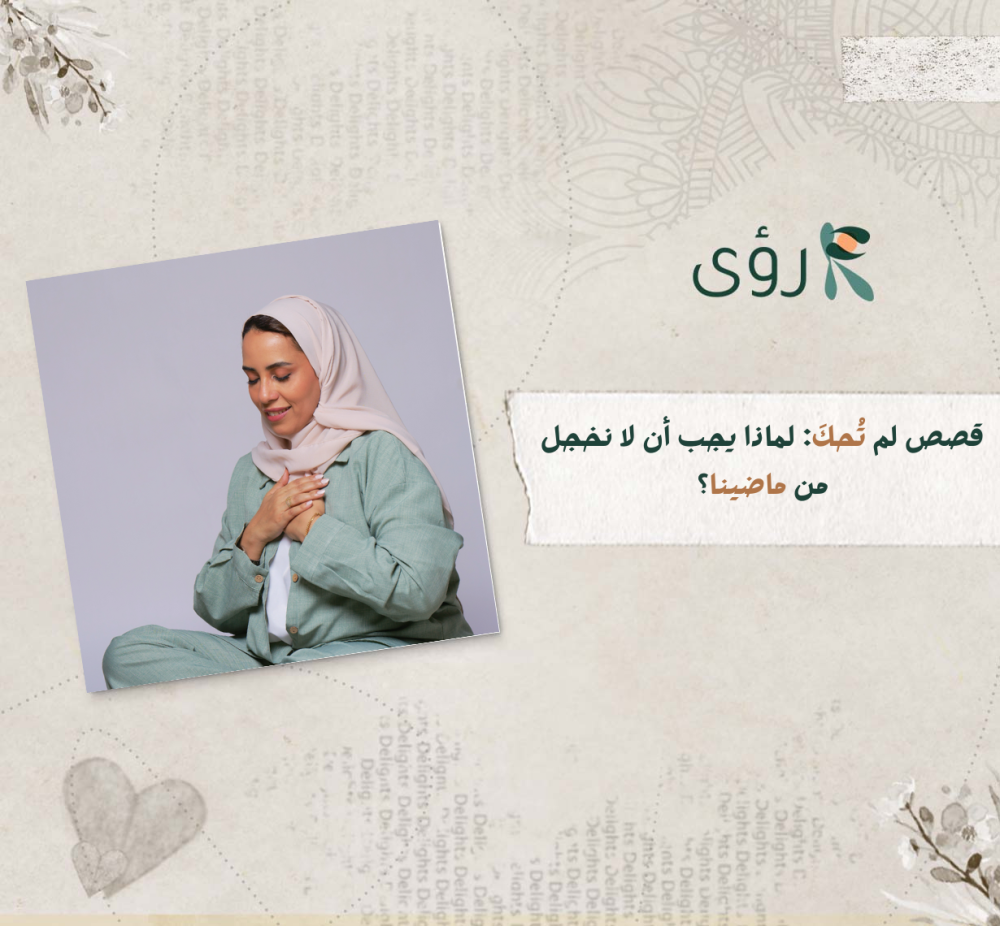
Inside every person is a story that has not been told.
It is not a story of pride or heroism, but a hidden chapter that we quickly close whenever someone gets close to its truth.
A past we know very well…
But we don't like to remember it.
We don't like to be seen through it.
Yet we live as if he is still present in every decision, every fear, and every attempt at a new beginning.
When the past becomes a burden, not a memory
The past in itself is not a problem.
The problem begins when it transforms from an experience we lived through... into an identity we live by.
When we say to ourselves:
- I am like this because I was hurt.
- I don't deserve better because of what I did or what happened to me.
- I will not change, because reality has proven that.
Here, the past is no longer a memory, but rather transforms into a silent inner prison.
A story similar to many others
She smiled a lot.
She is successful in her work, poised in her speech, and calm in her presence.
But deep down, she carried a constant feeling of shame, the source of which she did not know exactly.
Her past wasn't "bad" by other people's standards,
But it was painful enough to make her doubt herself every time she tried to start over.
The closer you get to an opportunity,
An inner voice said:
"You're not the version that deserves this."
This sound was not actually present.
Rather, it is in memory.
Why are we ashamed of our past?
Shame about the past does not come from the event itself.
Rather, it is from the meaning that we associated with it.
- When we didn't understand what happened
- When we were not allowed to express ourselves
- When we were burdened with a sin that did not concern us
- When we were asked to "get over it" before we healed
At that moment, the pain freezes.
The past becomes something we hide instead of understanding it.
The past is an event… not an identity
This sentence alone is capable of causing a profound internal transformation:
What happened to you is not you.
What you have been through does not define you.
It is part of a story in which you are the hero.
the past:
- Experience, not judgment
- Chapter, not book
- Impact, not destiny
But the subconscious mind does not differentiate between the event and the identity.
He replays the old story whenever he encounters a new present.
How does the unreleased past affect our lives today?
- Relationships we live with excessive caution
- Opportunities we reject for fear of repetition
- A persistent feeling of unworthiness
- Resistance to change despite desiring it
- An identity built on defense, not choice.
Here, the past is not behind us.
Rather, it is within us.
Liberation does not mean denial
Being free from the past does not mean:
- Forgetting him
- Justifying what happened
- Pain reduction
Rather, it means:
- He understood it without being harsh.
- Separate him from your value
- Redefine yourself outside of his framework
- Releasing the pent-up emotion associated with it. Here, the event loses its meaning and its pain.
This does not happen by the mind alone, because some stories are recorded in the body and feelings, not just in memory.
Why do we sometimes need editing sessions?
Because some experiments:
- Not lived consciously
- She was not allowed to leave
- She didn't find a safe space
Trauma release sessions don't take you back to the past.
Rather, it breaks your emotional attachment to it, releases the lingering painful feelings, and dismantles the hindering beliefs that resulted from it, which have always been the cause of your stumbling.
Many who have undergone these sessions have described a recurring feeling:
"The memory is still there, but it no longer hurts me."
And this is where the real difference begins.
From liberation to rebuilding identity
After liberation, something different happens:
- The questions and internal dialogues change
- The harsh inner voice softens
- A desire to build a new version of oneself emerges.
- We sow self-love and it grows session after session
This is where the shock release package comes in.
Which not only relieves pain, but also helps you to:
- Understanding and dealing with your feelings consciously
- Building an identity based on choice, not defense
- Making decisions from the present, not from memory.
- Lead your life calmly and steadily
Practical steps to break free from the past
- Admit that what happened affected you, without shame.
- Separate the experience from your self-worth.
- Notice when the past tense is used instead of the present tense.
- Give yourself a safe space to unwind, whether alone or with a professional.
- Rediscover yourself and consciously begin building a new identity.
In short: Your story doesn't need to be hidden.
Your past is not a flaw, not a judgment, and not a definitive definition of you.
It's a story…
You are not the story, but the one who tells it.
When you stop being ashamed of it, you begin for the first time to write a new chapter, not because the past has disappeared, but because it no longer guides you.
A sincere invitation
If you feel that your past is still whispering in your decisions, perhaps it's time not to silence it by force.
Rather, liberate it through awareness.
From here… true freedom begins.